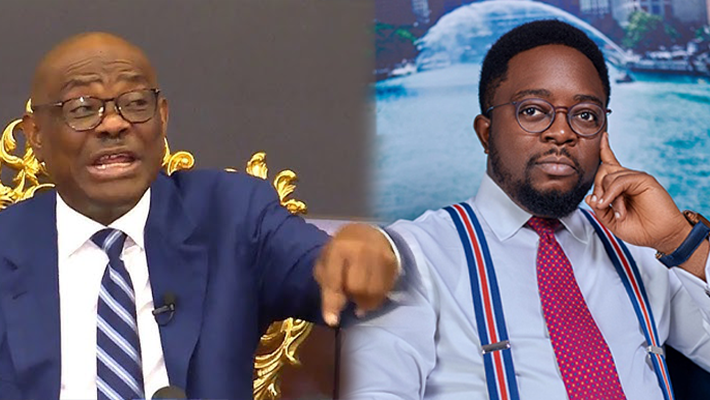
Wike’s “Shoot” Remark Sparks Backlash After Comment About Seun Okinbaloye
Abuja, Nigeria — A political controversy has erupted following a remark by Federal Capital Territory Minister Nyesom Wike directed at television journalist Seun Okinbaloye, prompting condemnation from media groups, civil society organisations, and press freedom advocates.
The dispute began after Wike reacted to comments made by Okinbaloye on a television programme discussing Nigeria’s political landscape and concerns about a possible drift toward a one-party state. During a media interaction in Abuja, Wike said, “If there’s any way to break the screen, I would have shot him,” a statement widely interpreted as a threat. 
Widespread criticism from journalists and rights groups
Media organisations quickly condemned the remark, arguing that such rhetoric could intimidate journalists. The Nigeria Union of Journalists described the comment as “reckless and violent,” warning it “constitutes a direct and unacceptable attempt to intimidate and silence the press.” 
Similarly, press freedom advocates and civil society groups cautioned that conditional threats or violent language from public officials could create a “climate of fear” and undermine democratic principles. 
The criticism intensified as professional bodies and broadcasters called for a public apology, with some warning they might boycott the minister’s media engagements if he failed to retract the statement. 
The controversy also prompted organisations such as the Nigeria Guild of Editors and the Socio-Economic Rights and Accountability Project to demand an investigation, urging authorities to address threats against journalists and uphold press freedom. 
Other press groups, including international media organisations, criticised the remark, arguing that language suggesting violence against journalists erodes democratic discourse and public confidence. 
Reacting publicly, Okinbaloye said he would not be intimidated by the minister’s comment, declaring, “I’m not afraid, and I will never be intimidated,” while reaffirming his commitment to holding public officials accountable. 
Amid mounting backlash, Wike later sought to downplay the statement, describing it as a figure of speech rather than a literal threat. His aides argued the comment was made in frustration and had been taken out of context.
The incident has reignited debate over the safety of journalists and the tone of political discourse in Nigeria. Analysts say remarks perceived as threats, even when intended rhetorically, risk encouraging hostility toward media professionals and weakening democratic accountability. 
While Wike has clarified his comments, the controversy continues to draw attention to the delicate relationship between political leaders and the media, with journalists and civil society groups insisting that public officials must avoid language that could be seen as threatening or intimidating.