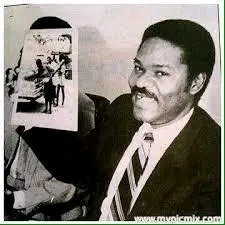
“Dele Giwa asked if he would die, worried about family after parcel bomb blast” — Doctor By Oluwatobiloba Iyanuoluwa Olukanni
Dr Dokun Adedeji, the medical doctor who treated late Nigerian journalist Dele Giwa following the parcel bomb attack that claimed his life in 1986, has recounted the journalist’s final moments, including his desperate question about survival and concerns for his family.
Adedeji spoke on Monday at the launch of Dele Giwa’s Granite Journalism, a book commemorating the life and legacy of the late journalist, at the Nigerian Institute of Journalism (NIJ) in Lagos.
The physician recalled how Giwa remained conscious despite sustaining severe injuries from the explosion, describing the experience as one of the most disturbing moments of his medical career.
Giwa, the founding editor-in-chief of Newswatch magazine, was killed on October 19, 1986, when a parcel bomb exploded at his residence in Ikeja, Lagos. He was 39 years old.
According to Adedeji, the journalist was still able to communicate when he was brought in for treatment, despite the severity of his injuries.
Recounting the encounter, the doctor said Giwa looked at him and asked in Yoruba, “Dokun, ṣe mi ò ní kú ṣá?”, meaning, “Dokun, I hope I won’t die?”
Adedeji said he could not assure the journalist that he would survive, admitting that the extent of his injuries had left him shaken. The doctor recalled that Giwa subsequently asked him to raise the hospital bed to enable him to breathe better while the medical team continued efforts to save his life.
“I was shaking, but we kept working,” Adedeji recalled while describing the desperate attempts to stabilise the journalist.
Beyond his struggle to survive, Giwa remained concerned about the safety of his family following the explosion. Adedeji said the journalist repeatedly asked about his wife, Funmi, and his youngest daughter, Aisha, who was about one year old at the time of the attack.
Aisha was reportedly crawling towards her father’s study when the parcel bomb exploded, narrowly escaping the immediate impact of the blast.
Reflecting on the incident nearly four decades later, Adedeji said the injuries Giwa sustained were so extensive that he believed the journalist would not have survived with meaningful physical function.
The physician said that, given the extent of the damage to his body, it was ultimately better that Giwa died than survive in a severely impaired condition. Despite the medical team’s efforts to resuscitate him, Giwa died at approximately 1 p.m. on Sunday, October 19, 1986.
His killing remains one of the most notorious attacks against a Nigerian journalist, with the circumstances surrounding the parcel bomb assassination continuing to attract public interest decades later.
The recollection came during the launch of Dele Giwa’s Granite Journalism, edited by Ray Ekpu, Giwa’s deputy and successor at Newswatch magazine. The event brought together journalists, former colleagues and other dignitaries to reflect on Giwa’s contributions to Nigerian journalism and the circumstances surrounding his death.
Giwa was widely associated with the development of investigative journalism in Nigeria through Newswatch, which he co-founded in 1984 with Ray Ekpu, Dan Agbese and Yakubu Mohammed.
His assassination, carried out through a parcel bomb delivered to his home, has remained a defining episode in the history of the Nigerian press.
Nearly 40 years after his death, Giwa remains an enduring figure in Nigerian journalism, remembered for his role in building Newswatch and his contribution to the country’s media landscape.