“Revolution is also a democratic way…” — Activist Hassan Soweto
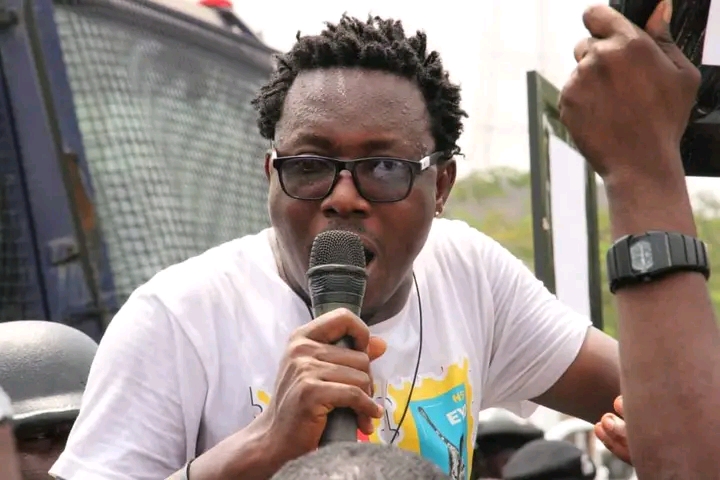
Human rights activist Hassan Soweto has described revolution as a legitimate democratic expression for citizens who have long suffered oppression, poverty, and exclusion, arguing that it represents a form of collective resistance aimed at restoring dignity and justice.
Speaking during the Government X Space monthly edition discussion on the state of the nation, as Nigeria looks ahead to the 2027 general elections, Soweto said revolution should not be dismissed or delegitimized as undemocratic, but rather understood as an expression of majority will when institutional channels fail to deliver justice.
According to him, “Revolution is also a democratic way of a people that has been battered for too long, a people that has been made poor for too long, a people that has suffered all kinds of indignities for too long. Revolution is also a way through which they can assert and claim their dignity. And revolution is a democratic process because it is the uprising of the majority to enforce its opinion against the minority. And that route is open to all of us…”
He further argued that citizens should not be “blackmailed” into rejecting revolutionary action as a means of political change, insisting that in many societies, people resort to mass action when formal democratic structures become insufficient.
Soweto added that while elections, the judiciary, and other institutions are designed as constitutional avenues for participation, they often remain limited in their capacity to fundamentally alter entrenched power structures.
He said elections occur only periodically and are heavily structured, while entry into formal political competition is, according to him, restricted by high financial and systemic barriers, “The electoral space is not fully open. You first have to set up a political party, and if you don’t have hundreds of millions of naira, you cannot even participate meaningfully,” he said, pointing to what he described as structural inequalities within Nigeria’s political system.
The activist concluded that citizens across the country must remain aware of the available avenues for asserting their rights, whether through institutional participation or mass civic engagement.