Baba Ijesha Remains a Pedophile: A Baby Does Not Wash Away a Crime
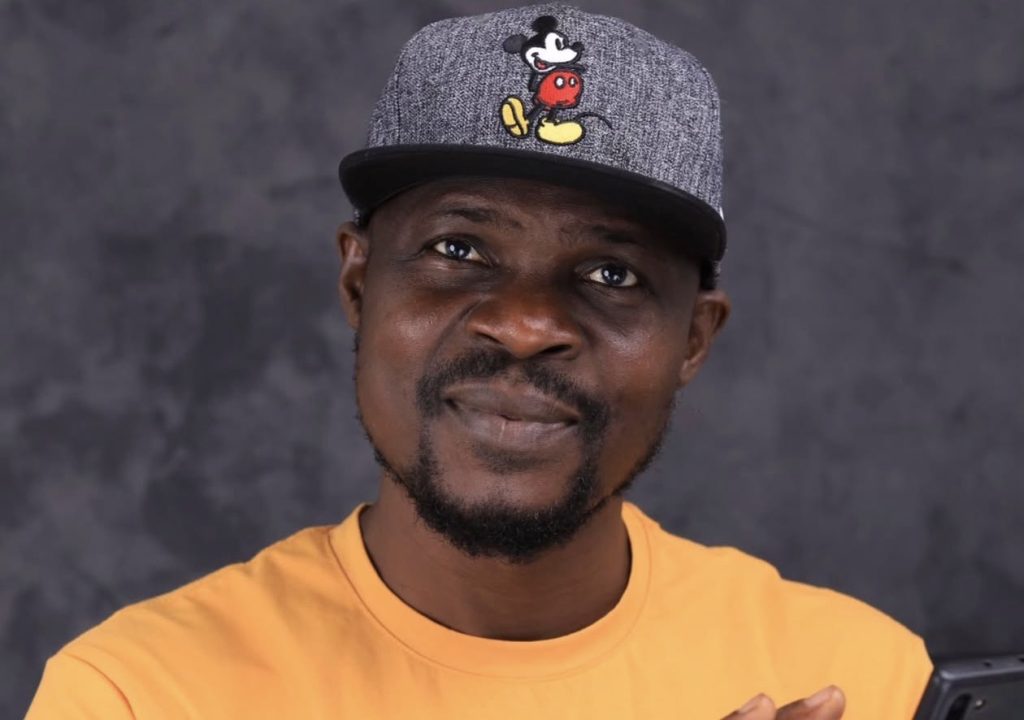
Seven months after walking out of Kirikiri prison, convicted child sex offender Baba Ijesha is being celebrated across Nollywood as a new father. Nigeria must ask itself what that celebration is really saying to survivors.
On Monday, June 16, 2026 — exactly five years to the month after his arrest — Nollywood actor Olanrewaju Omiyinka, known to millions as Baba Ijesha, announced the birth of a son with Abiodun Folashade Tokunbo, the celebrity fashion entrepreneur known as CEO Luminee. He named the child King Kagar. He thanked God. He called his partner his “Jagaban.” Colleagues flooded his comment section with prayers and congratulations. Mercy Aigbe posted a glowing tribute. The internet cooed. And somewhere, a survivor who was first abused at the age of seven sat with the silence that follows when a nation decides to move on without her.
Nigeria has a short memory. Or perhaps it is not a short memory at all — it is a selective one, trained over generations to extend grace to men of status and charisma while rationing it carefully away from the children they harm. The rehabilitation of Baba Ijesha, barely seven months after his release from Kirikiri Maximum Security Prison, is not a spontaneous outpouring of human forgiveness. It is a performance — and it must be named as one.
CEO Luminee — a woman with her own following, her own brand, her own apparent intelligence — has chosen to describe Baba Ijesha’s heart as “pure.” She has described their child as God’s blessing on a “strong man.” She has built a romantic narrative with a man on the sex offenders register, and Nigeria’s entertainment community has cheered her for it. This is not, at its core, about judging her personal choices. She is a grown woman and what she does with her life is ultimately her own affair. The problem is the cultural signal that the celebration of their union transmits — loudly, publicly — to every child in this country who has been abused by someone “one in a million.”
The signal is this: if you are famous enough, charming enough, and can find a wealthy, beautiful woman to love you publicly, the record will be rewritten. A baby is a powerful social technology for the erasure of inconvenient histories. It conjures sympathy, softens edges, and shifts narrative gravity from victim to family man. The child has done nothing wrong — he is innocent and deserving of love — but his birth is being used, whether deliberately or not, as a kind of social laundering. The man who “sucked the fingers” of a teenager in her own home, who placed a child on his lap decades ago, is now a father again, and the content is heartwarming.
Consider what was required for this moment to arrive. Princess — comedienne Damilola Adekoya — had to endure years of mockery, backlash, and accusations that she “set up” a colleague, simply for reporting the abuse of a child in her care. She was called vindictive. She was told she was destroying a man’s life. Actor Yomi Fabiyi staged a play widely seen as defending Baba Ijesha and attacking Princess’s credibility. Lege Miami and others in the industry waged a sustained public relations campaign for the convicted man. Princess fought back, alone, against the institutional weight of Nollywood’s male-coded solidarity — and she won, in the courts at least. Now, five years on, the same industry that attacked her is uploading baby photos and writing “Congratulations, fam!”
This is not incidental. It is a pattern so familiar in Nigerian public life that it has almost become invisible: the abuser becomes the victim of his fall from grace; the survivor becomes an obstacle to his comeback; and some woman — a new one, unsullied by association with the scandal — provides the social alibi for his restoration. In politics, we call it a rehabilitation tour. In entertainment, we call it a comeback arc. We rarely call it what it is: the erasure of a child’s suffering from the public record.
It must also be said plainly: Baba Ijesha is on the Lagos State Sex Offenders Register. This is not a social media allegation or a rumour from a feuding colleague. It is a legal instrument, administered by the state, designed to protect communities — including the communities of children who interact with celebrities, who attend events, who follow influencers, who grow up in a country where a man like this can announce his newborn son to half a million followers and receive nothing but applause. Why is that register not mentioned in a single congratulatory post? Why do the editors of outlets covering this story not think it relevant information for their readers?
The answer is that Nigerian media — like Nigerian society more broadly — has not yet developed the cultural vocabulary to hold two things in mind simultaneously: that a man can be capable of love and capable of abuse; that a new child does not retroactively heal an old victim; that celebrating fatherhood is not in itself wrong, but that the context in which the celebration occurs shapes its meaning entirely. We are, as a society, still reaching for the simpler, more comfortable story. The man is forgiven. The man has moved on. Let us all move on.
Let us be clear about what moving on actually costs. Every child sexual abuse survivor in Nigeria who watches this week’s coverage learns something. They learn that if their abuser is popular enough, the cultural apparatus will reconstitute itself around him within years of a conviction. They learn that the women who support abusers will be celebrated, and the women who report them will be relitigated in comment sections forever. They learn that a birth announcement generates more social warmth than a verdict ever did. This is not abstract. This is pedagogy. This is what we are teaching.
Child rights organisations worked hard on the Baba Ijesha case. The Lagos State Domestic and Sexual Violence Agency used it as a landmark advocacy moment. UNICEF Nigeria, women’s groups, and legal advocates pointed to the prosecution as evidence that the system could work — that survivors could come forward, that evidence could be gathered, that courts could convict. All of that institutional effort now competes, in the public imagination, with a maternity photo shoot that went viral before midday.
There is nothing wrong with Baba Ijesha fathering a child. There is nothing wrong with CEO Luminee choosing her own partner. There is nothing wrong with genuine, private forgiveness — between individuals, freely given, on their own terms. What is wrong — what this opinion piece exists to name — is the public spectacle of rehabilitation being staged before Nigeria’s largest entertainment audience, without a single asterisk, without a single acknowledgement of what this man did, without a moment’s pause for the child who bore the cost of his actions and who now watches Nollywood celebrate him into the sunset.
Accountability is not the enemy of grace. But grace without accountability is not grace at all. It is amnesia dressed in celebration clothes. Nigeria can do better. Its entertainment industry — the most watched, most culturally influential in Africa — has an obligation to model better. Congratulations to the child who arrives into this world innocent and deserving. The rest of this story belongs to the one who never got to choose.