Ticket in Hand, Trial in Court: Yahaya Bello May Become a Senator Amid ₦190bn Fraud Cases
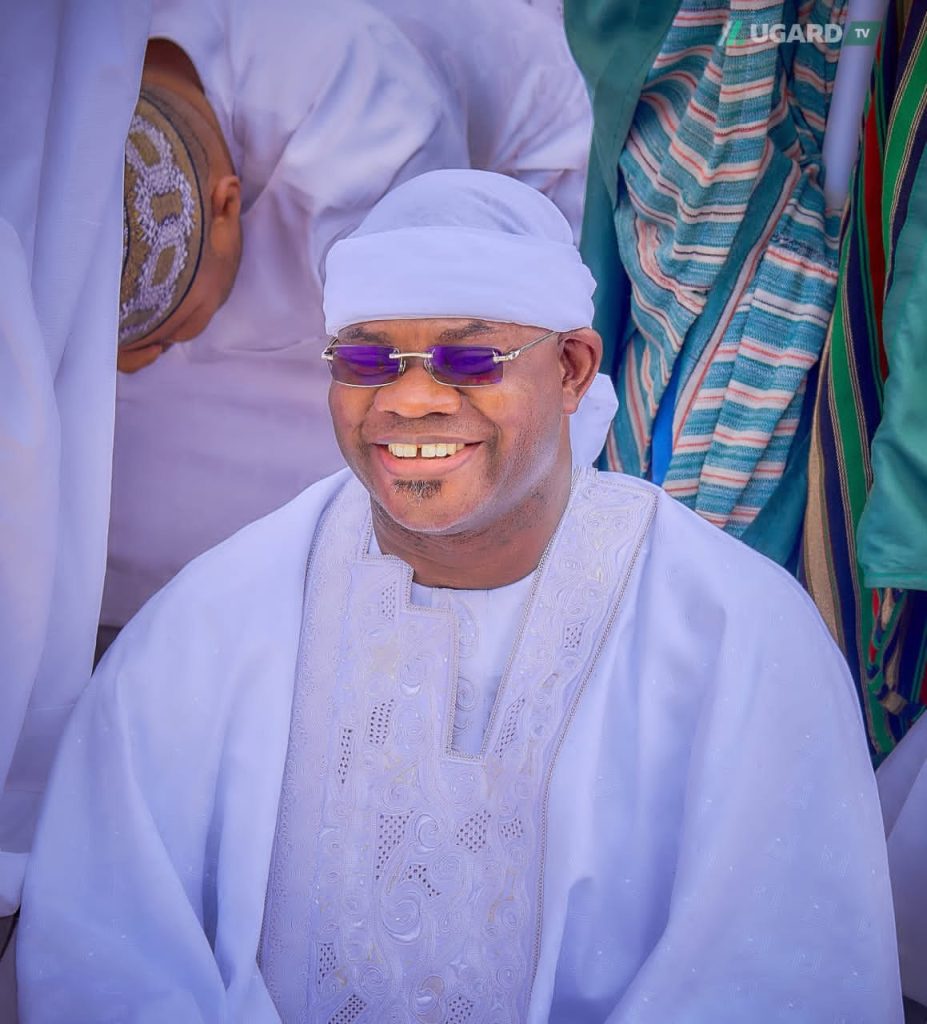
The former Kogi governor secured a landslide in the Kogi Central APC primary — even as he faces two simultaneous criminal trials for alleged money laundering and misappropriation totalling nearly ₦200 billion.
On Monday, May 18, 2026, Yahaya Bello stood before party delegates in Kogi Central and received more than 72,000 votes in the All Progressives Congress senatorial primary. It was, by any measure, a resounding political victory. It was also, by any measure of accountability, a deeply troubling one. At that moment, the former two-term Kogi State governor was simultaneously under active prosecution at two separate courts in Abuja — facing a combined 35 criminal counts for the alleged laundering and misappropriation of public funds that prosecutors say exceeded ₦190 billion.
On Monday, May 18, 2026, Yahaya Bello stood before party delegates in Kogi Central and received more than 72,000 votes in the All Progressives Congress senatorial primary. It was, by any measure, a resounding political victory. It was also, by any measure of accountability, a deeply troubling one. At that moment, the former two-term Kogi State governor was simultaneously under active prosecution at two separate courts in Abuja — facing a combined 35 criminal counts for the alleged laundering and misappropriation of public funds that prosecutors say exceeded ₦190 billion.
Nigeria’s political establishment has grown accustomed to elected officials navigating the courts while retaining their status. But the scale of the allegations against Bello — and the drama that preceded his eventual arraignment — make his re-emergence as a frontline candidate for the Senate a moment that cuts to the heart of what accountability means in Nigerian public life.
Bello faces prosecution by the Economic and Financial Crimes Commission (EFCC) on two separate fronts. The first — and older — case sits before Justice Emeka Nwite at the Federal High Court in Abuja. It carries 19 counts of money laundering, alleging that Bello diverted funds belonging to the Kogi State Government and the state’s local government councils during his tenure as governor from January 2016 to January 2024.
The EFCC alleged in the first case that state funds were channelled to acquire luxury properties in prime locations in Abuja and in Dubai, United Arab Emirates. Among the specific claims: that ₦100 million from the state treasury was used to purchase a property at Gwarimpa II in Abuja in 2021, and ₦950 million spent on a second property in Maitama, Abuja, in 2023. The anti-graft agency further alleged that Bello withdrew $720,000 from Kogi State coffers to prepay school fees for his child abroad.
The second case — filed by the EFCC in September 2024 at the FCT High Court — added 16 fresh counts of criminal breach of trust against Bello and two co-defendants, Umar Shuaibu Oricha and Abdulsalami Hudu. That charge carries an even larger alleged figure: ₦110.4 billion, said to have been diverted as far back as 2016, in Bello’s inaugural year in office. Prosecutors allege that multiple properties in Abuja and Dubai were acquired with these misappropriated public funds.
The path to Bello’s eventual arraignment was itself one of the most dramatic episodes in Nigeria’s recent anti-corruption history. After the EFCC first filed charges, Bello retreated from public view, defying multiple court summonses. On April 18, 2024, the commission formally declared him wanted — the first time a former Nigerian governor had been placed on such a watchlist by the EFCC. The Attorney-General of the Federation, Prince Lateef Fagbemi, SAN, publicly called on Bello to surrender and warned against obstruction of the anti-graft agency.
A Kogi State High Court in Lokoja had, in February 2024, issued an order restraining the EFCC from arresting, detaining, or prosecuting Bello — a ruling the ex-governor leaned on to justify his absence from proceedings. But in August 2024, the Court of Appeal in Abuja struck down that judgment in scathing terms, describing the Kogi court’s decision as “scandalous” and ruling that no court has the power to shield a citizen from criminal prosecution by a law enforcement agency.
Even after the appeal court ruling, Bello’s capitulation to the EFCC was tangled in political theatre. In September 2024, he arrived at EFCC headquarters in Abuja accompanied by his successor, incumbent Kogi Governor Usman Ododo — shielded by the latter’s security detail and official convoy. The EFCC declined to formally arrest him that day, leading to a tense standoff at the Kogi State Government Lodge in the Asokoro district of Abuja, where a confrontation between EFCC operatives and the governor’s security personnel resulted in a reported shootout. Each side traded accusations over what had occurred.
It was not until late November 2024 that Bello was formally arrested — reportedly sighted at the EFCC headquarters car park and taken into custody by the agency’s chief security officer at 12:54 p.m. He was detained and subsequently arraigned on both charges, to which he pleaded not guilty. His lawyers have consistently described the cases as politically motivated.
The announcement by Returning Officer Dr. Sadiq Mohammed on May 18 confirmed what party insiders had long anticipated: Bello was never seriously contested. His two opponents — APC Diaspora Secretary Momoh Obaro and one Ibrahim Yakubu Adoke — collected a combined 315 votes across five local government areas in Kogi Central: Adavi, Ajaokuta, Ogori, Okehi, and Okene. Bello swept them all.
Reports indicate that the APC initially faced internal uncertainty over whether Bello would be cleared to contest, given the corruption charges. But the party ultimately endorsed him as a consensus candidate — a pattern consistent with a broader strategy, reportedly supported by President Bola Tinubu, of empowering state governors to manage candidate selection processes. The forms for Bello’s nomination were notably purchased and presented by a coalition of women from Kogi Central, framed publicly as a gesture of gratitude for his tenure.
Should Bello prevail at the 2027 general election, he would take the Kogi Central Senate seat from its current occupant — Senator Natasha Akpoti-Uduaghan of the Peoples Democratic Party — who has herself been embroiled in a protracted legal and political battle following her suspension from the Senate in 2025. That context only sharpens what observers already describe as a titanic rematch in the making.
Bello and his legal team have mounted a consistent two-pronged defence. Procedurally, they have challenged the jurisdiction of courts hearing the cases, sought to exclude evidence, and cross-examined prosecution witnesses rigorously on whether the former governor’s name appears directly on any transaction. In the Federal High Court proceedings in February 2026, a compliance officer from Access Bank confirmed under cross-examination that he found no evidence linking Bello to the impugned transactions either as a beneficiary or as an authorising signatory. A Zenith Bank compliance officer offered similar testimony in the N80.2 billion case.
On substance, Bello’s Senior Advocate, Joseph Daudu, SAN, has publicly characterised the prosecution as “political and not justified.” The defence has argued that payments from Kogi’s local government councils to various contractors were normal banking transactions authorised by LGA chairmen — not the governor — and that attaching Bello’s name to them constitutes, in Daudu’s framing, an attempt to criminalise routine governance.
The EFCC counters that the structure of the alleged scheme was precisely designed to obscure Bello’s role — routing funds through contractors, intermediaries, and companies to acquire assets for his benefit while keeping his name off the paper trail. Lead prosecution counsel Kemi Pinheiro, SAN, told the court in February 2026 that what occurred was “stealing by disguise.”
Both trials are expected to continue in the second half of 2026, with the prosecution still in the process of concluding witness testimony in the N80.2 billion case. The FCT High Court dismissed Bello’s latest jurisdictional challenge on June 16, 2026 — just three days before this publication — clearing the path for the ₦110.4 billion case to proceed. Nigeria’s Administration of Criminal Justice Act, under which the EFCC is prosecuting, does not generally permit a criminal trial to be used to bar a defendant from political activity — meaning Bello faces no legal impediment to standing for election while his trial continues.
The question that hangs over the proceedings is one of timing. Nigeria’s 2027 general elections will arrive before either trial is likely to reach a verdict. If Bello wins the Senate seat, he would enter the legislature as an indicted man whose case is still active — a scenario not without precedent in Nigerian political history, but one that accountability advocates say normalises impunity at the highest levels of governance.
For civil society groups and legal experts watching the cases, the central concern is less about whether Bello will eventually be convicted and more about what it means that the political system — from his party to his electorate — shows every sign of absorbing the corruption allegations without consequence. The EFCC has secured its trials. Whether the courtroom will ultimately deliver accountability or serve as background noise to a political comeback is the question 2027 will answer.