NAFDAC says it uncovers over 100 sacks of empty alcohol bottles suspected for counterfeiting in Lagos
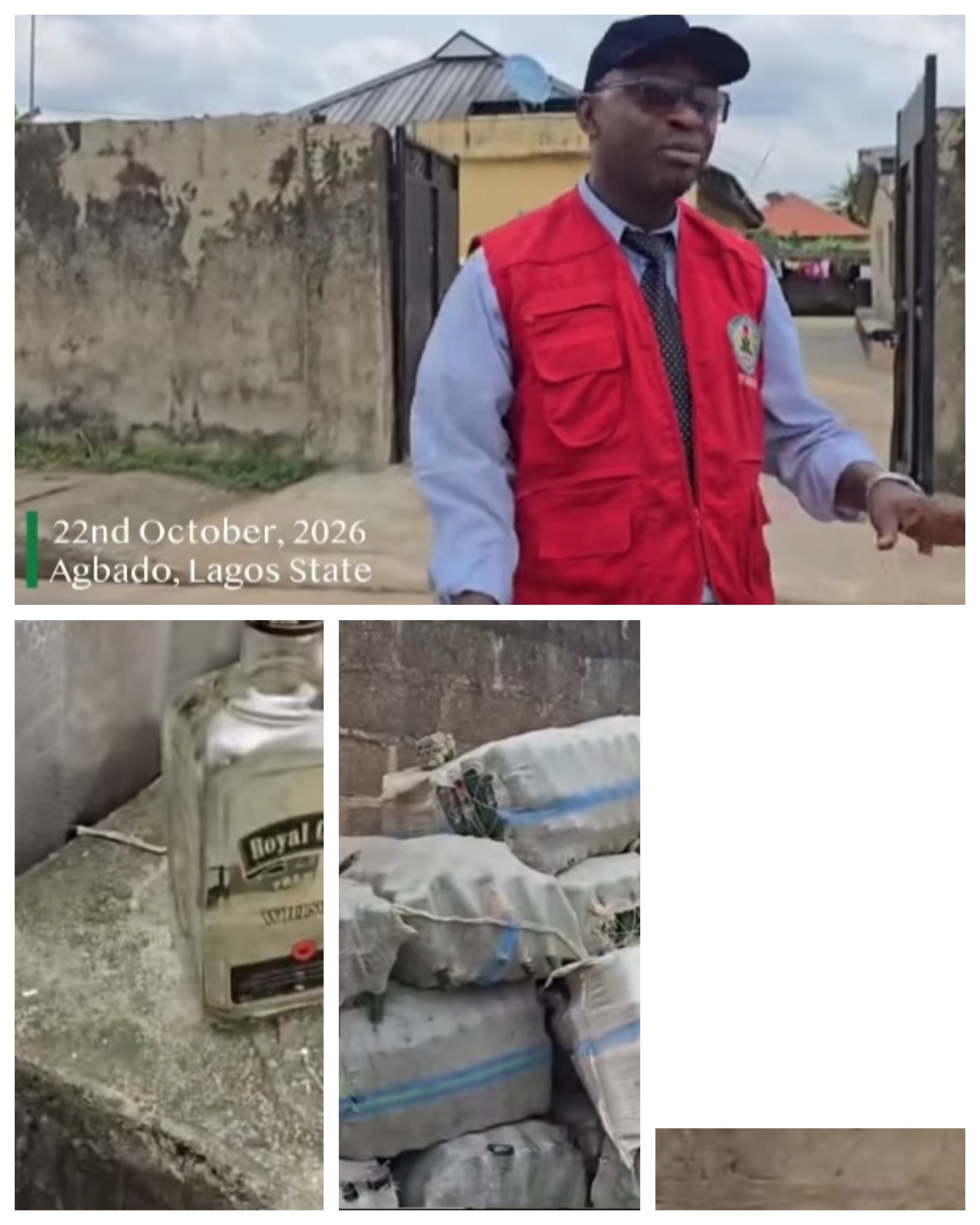
The National Agency for Food and Drug Administration and Control (NAFDAC) has said it uncovered a residential building at 322B Meiran Road, Agbado Oke Odo, Lagos, where over 100 sacks of empty alcoholic beverage bottles were stored for suspected use in the production of counterfeit drinks.
The agency said the bottles, which included containers bearing the names of popular alcoholic beverage brands, were destroyed to prevent their possible reuse by suspected counterfeiters.
The discovery was disclosed in a video shared on NAFDAC’s Facebook page on Friday, showing officials inspecting the premises and the large quantity of empty bottles found at the location.
Speaking during the operation, Kunle Ojo, an assistant director in NAFDAC’s Investigation and Enforcement Directorate, said the agency acted on credible intelligence about suspicious activities in the area.
“On arriving, we saw these kinds of bottles. These are bottles covered with tarpaulins. We have a lot of bottles covered with tarpaulins here, now ready to be supplied to people that are counterfeiting,” Ojo said.
He explained that the bottles came in different sizes and were associated with various alcoholic beverage brands, including Action Bitter, Hennessy and other whisky products.
According to him, the bottles were suspected to have been collected for washing and subsequent supply to individuals involved in the production of counterfeit alcoholic drinks.
“What these people are planning to do, or what they do here, is to wash the bottle, supply to different suspected counterfeiters to be used for another production,” he said.
Ojo expressed concern that the bottles were being stored in a residential neighbourhood, describing the activity as unacceptable.
“This is a residential area, and this is not acceptable to government, and we are here to safeguard the health of the nation,” he added.
The NAFDAC official said the agency destroyed the empty bottles to prevent them from being reused in the production and packaging of fake alcoholic beverages.
He also called on Nigerians to support the agency’s enforcement efforts by reporting suspicious activities in their communities to the nearest NAFDAC office.
“We are calling on all Nigerians, please, when you see something taking place in your area, kindly notify the nearest NAFDAC office so that we can stop this menace, so that we can save our country from all these counterfeiters,” Ojo said.
The circulation of counterfeit, adulterated and substandard products in Nigeria has continued to raise concerns about consumer safety, with recent reports highlighting the presence of fake medicines, food products, cosmetics, toothpaste and alcoholic beverages in the market.
The problem has drawn renewed attention amid public concerns over the safety of everyday consumer products and intensified enforcement activities by the National Agency for Food and Drug Administration and Control.
In September 2026, NAFDAC disclosed that it had secured 64 convictions for counterfeiting between June 2025 and June 2026, describing the period as a record in its enforcement history. The agency said the convictions involved different categories of regulated products, including fake antibiotics, falsified antimalarial medicines and codeine-containing cough syrups. It also reported seizures and destruction of counterfeit, expired and non-compliant products across the country.
The concerns extend beyond medicines to food, personal-care products and beverages. In September, reports of suspected fake toothpaste, contaminated bottled water, adulterated yoghurt and other consumer goods generated public concern.
The dangers associated with adulterated alcoholic drinks are particularly concerning because some toxic substances can cause severe poisoning even when the affected beverage looks similar to a genuine product. Methanol, an industrial alcohol that is unsafe for consumption, can cause blindness, damage to vital organs and death when ingested.
The risk was underscored by a reported poisoning incident in Ondo State in September 2026 where at least 48 people died after consuming a locally brewed alcoholic concoction suspected to contain methanol. The state health commissioner said 182 people were believed to have been affected, while police reported arrests in connection with the incident. The suspected contamination and the circumstances surrounding the deaths were matters still under investigation.