Nigeria Bet Big on Lithium During a Price Crash. So Who Actually Gets Rich?
For years, the story of Nigeria’s minerals has followed the same pattern: trucks carrying raw ore leave the country, other nations make the real money turning that ore into something useful, and Nigeria is left with little more than dust and unpaid royalties. In July 2026, the government tried to change that story. President Bola Tinubu represented by Vice President Kashim Shettima opened what’s being called West Africa’s biggest lithium processing plant in Endo, a small community in Nasarawa State. The government is proud of it, and calling it proof that its new mining policies are working. It’s a big deal. But it’s not the whole story.
What Exactly Got Built
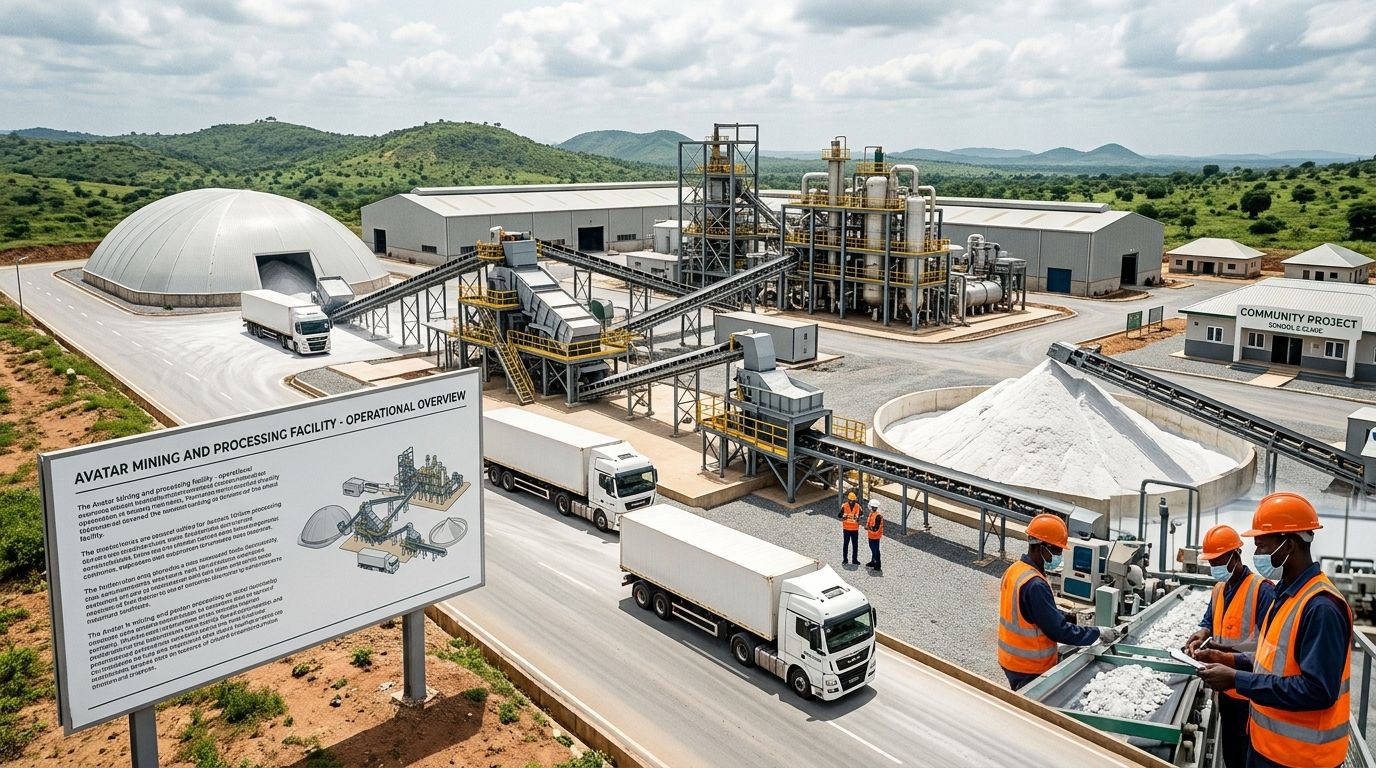
Lithium is the metal used to make batteries, the kind that power electric cars, phones, and laptops. The new plant, built by a company called Diamond New Energy together with two Chinese partners, Jiuling and Canmax, can process 6,000 tonnes of lithium rock every day. That adds up to about 3 million tonnes a year. It cost around $250 million to build.
The company’s boss, Yu Chongqiang, said his companies handle more than a fifth of the world’s lithium supply, and that they chose Nigeria as their very first project in Africa because the country felt safe to invest in and the government’s rules were friendly to business.
The state governor, Abdullahi Sule, said the plant has already created more than 1,000 direct jobs and over 2,000 more jobs indirectly through things like transport, food, and housing for workers. He’s now hoping to attract more investors, since Nasarawa also has gold, zinc, copper and iron ore in the ground.
Why the Government Made This Rule
This plant didn’t just happen by chance. Since 2023, Nigeria has had a firm rule: companies can no longer dig up minerals and ship them out of the country raw. They must process them inside Nigeria first. The man behind this rule is Dele Alake, the minister in charge of solid minerals. Back in 2023, he put it simply: if you want to take Nigeria’s minerals, you first have to “start a factory” to add value to them here.
The Endo plant is the government’s biggest example yet that this rule is working. Alake says the policy has already pulled in more than $2.6 billion in mining investment over two years. He points to several more lithium plants either being built or already open. One worth $800 million, another worth $600 million, and a $200 million plant near Abuja waiting to open. Chinese companies alone have reportedly put around $1.3 billion into Nigeria’s lithium industry since 2023.
This is the same idea Indonesia used with its nickel industry. Stop selling the raw material cheap, and instead force companies to process it inside your borders first, so your country keeps more of the profit.
The Part Everyone Skips Over
Here’s the piece of the story that gets left out of the celebration. Nigeria’s lithium boom has grown much faster than its ability to control it and that gap has already caused real harm.
Reporters from the Associated Press visited another mining site in the same state, Nasarawa, and found children as young as six digging for lithium by hand, earning about $2.42 a day. One buyer reportedly purchased lithium from these sites without asking any questions about where it came from or how it was mined. Nigerian officials have also said that money from illegal, unlicensed mining is helping to fund armed groups causing violence in the north of the country, something President Tinubu himself has spoken about.
The government has responded by creating a special unit, nicknamed the “Mining Marshals,” to catch illegal miners. But the arrests keep happening. In just one month in mid-2026, fifteen Chinese citizens and nine Nigerians were arrested and taken to court over illegal lithium mining in Nasarawa State, the very state where the shiny new plant now sits.
There’s also a quieter complaint: that Nigeria is making life easy for big Chinese companies while local, small-scale Nigerian miners are struggling. One industry report claims that hundreds of small mining licences have been cancelled on technical grounds, pushing some of those miners into illegal mining just to survive. Separately, a British-linked company called Jupiter Lithium says its mining licence was taken away and quietly handed to Chinese operators. A claim the Nigerian government denies, calling it an attempt to smear the country’s reputation.
The Timing Nobody’s Talking About
Here’s something most reports missed. Nigeria built this plant while the world’s lithium market was crashing and that timing might actually be the smartest part of this whole story.
In 2022, lithium prices were at an all-time high. Then a flood of new supply from Australia, Chile and China pushed prices down hard. By the time Diamond New Energy started building the Endo plant roughly a year before it opened in July 2026, the price of lithium had fallen by more than 80% from its 2022 peak, hitting a four-year low around mid-2025. Big international lithium companies were cutting production. Smaller ones were shutting down completely.
That’s usually the worst time to build something new. But in industries like mining, it can actually be the smartest time. If you build your factory while everyone else is scared and prices are low, you’re ready to sell right when the market bounces back instead of being stuck with an expensive factory you built at the top of the market, like a lot of other lithium companies did in 2022. And several market experts now believe the lithium market could flip from “too much supply” to “not enough supply” as early as 2026, thanks to a surprise rise in demand for large battery storage systems (used to store solar and wind power), not just electric cars. If that happens, Nigeria’s plant will be ready to sell right as prices start rising again; good timing, whether it was planned that way or not.
The Real Question: Where Does the Money Actually Go?
Here’s the harder question that the government’s celebration skips over: what exactly does this plant make and who makes the real money from it?
The Endo plant turns raw lithium rock into “lithium concentrate” basically a cleaned-up, more concentrated version of the rock. That’s a step up from shipping raw rock out with no processing at all. But it’s still an early step. The real money in the lithium business is made further down the line: turning that concentrate into pure battery chemicals (through a chemical process involving heating and acid treatment), then turning those chemicals into the parts that go inside an actual battery, and finally assembling the finished batteries themselves. One financial news outlet, bne IntelliNews, put it plainly: the Endo plant’s job right now “is in lithium mining and ore processing rather than producing finished batteries” even though officials talk about eventually building batteries and solar panels in Nigeria too.
In plain terms: the lithium concentrate made in Nasarawa most likely gets shipped somewhere else probably China, where most of the world’s battery-chemical factories already exist to become the more valuable product that eventually ends up inside a car or a phone battery. Nigeria earns money from the mining and the first cleaning step. Someone else earns the bigger money from turning it into something people actually buy.
Is anyone planning to fix that? There are small signs, but nothing solid yet. A separate company, Jupiter Lithium, has signed an early agreement with a US firm, ReElement Technologies, to design a factory that would turn Nigerian lithium rock into pure, battery-ready lithium chemicals, a step toward closing that gap. It’s a different company, in a different part of the country, and still just on paper. At the Endo opening itself, a local senator, Ahmed Wadada, publicly asked for Nigeria to eventually build the “full lithium chain” including actual battery-making in Nasarawa State. He also said he’s pushing a bill to turn a local college into a proper university for mining and engineering, to train the skilled workers Nigeria would need for that next step. But a senator asking for something, and an early-stage agreement on paper, are very different from an actual battery factory under construction. Right now, Nigeria has proven it can dig up lithium and clean it a bit. It hasn’t yet proven it can do the harder and far more profitable work that comes after.
So Big Win, or Big Headline?
Both can be true at the same time. The Endo plant is real. It’s not just a photo opportunity, it processes actual rock, employs actual people, and reflects a genuine change in how Nigeria is choosing to handle its minerals. In a country with a long history of big projects that were announced but never finished, that alone deserves some credit.
But “we built a factory” and “we fixed the lithium industry” are two very different claims and so far, the government has only earned the first one. The same state hosting this shiny new $250 million plant is also where children have been found digging for lithium by hand for a couple of dollars a day, and where police are still raiding illegal mining sites months after officials declared that the days of shipping out raw minerals were over. Nigeria also hasn’t answered the bigger question yet whether it will keep selling cleaned-up rock and letting other countries make the big profits, or actually build the factories that turn that rock into batteries, which is where the real money is. Until enforcement catches up with the big talk and until “adding value” means making battery chemicals and battery cells, not just cleaner rock, Nigeria’s lithium story will keep sounding very different depending on which part of the industry, and which part of Nasarawa, you’re looking at.
References
- The Whistler — Tinubu Commissions West Africa’s Largest Lithium Processing Plant In Nasarawa
- Businessday NG — Nigeria opens West Africa’s biggest lithium processing plant in shift from raw exports
- Channels Television — Tinubu Commissions 6,000-Metric-Tonne-Per-Day Lithium Processing Plant In Nasarawa
- Federal Ministry of Information and National Orientation — President Tinubu commissions 6,000 metric tons per day Lithium processing plant in Nasarawa State
- Energy News Network — Nigeria lithium processing, what the value-addition rule means for investors
- MINING.COM — Nigeria seeks to tighten rules to curb raw mineral exports
- Political Economist NG — Nigeria’s Mining Reforms Secure $2.6bn Investment and Massive Lithium Hubs
- Business & Human Rights Resource Centre — Nigeria: Children as young as six reportedly mine lithium in illegal operations for $2.42 per day
- AOL/AP — Nigeria is emerging as a critical mineral hub. The government is cracking down on illegal operations
- Pulse Nigeria — 15 Chinese nationals arraigned over illegal lithium mining as third case rocks Nigeria in one month
- National Accord Newspaper — Nigeria’s mining policy failures: A sector tilted toward China, strangling small miners and fuelling illicit operations
- AllAfrica — Nigerian Govt Denies ‘British Lithium Project’ Seizure, Alleges Smear Campaign Ahead of Tinubu’s UK Visit
- CarbonCredits.com — Lithium Prices Crash Below $10K, Hitting a 4-Year Low: Will the Market Rebound?
- Investing News Network — Lithium Market 2025: A Year of Volatility and Opportunity
- Fastmarkets — Facing the tightening lithium supply challenge in 2025
- MiningVisuals — Lithium Market Balance: Visualizing the Shift from Surplus to Deficit by 2026
- bne IntelliNews — Nigeria opens Chinese-built $250mn lithium plant, targets leading role in battery supply chain
- Businessday NG — Tinubu commissions 6,000 metric tons per day lithium processing plant in Nasarawa
- Batteries International — Nigeria welcomes first large-scale lithium mining
- African Business — Chinese companies grab stake in Nigeria’s lithium and EV future