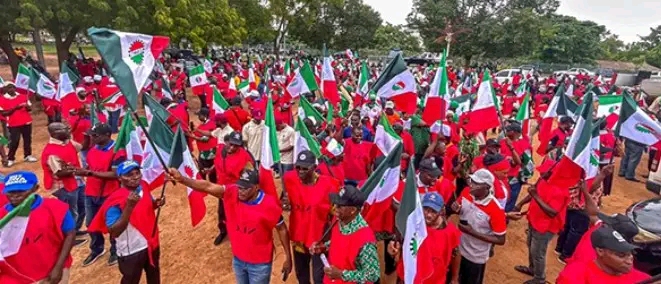
Nigeria Labour Congress Urges Congress of South African Trade Unions to Confront Rising Xenophobic Attacks on Migrant Workers in South Africa
The Nigeria Labour Congress, NLC, has called on the Congress of South African Trade Unions, COSATU, and other labour organisations across Africa to take decisive action against rising xenophobic attacks targeting migrant workers in South Africa.
In a letter dated May 7, 2026, signed by NLC President Ajaero, addressed to the president of COSATU, the NLC condemned the renewed violence against African migrants, including Nigerians, Zimbabweans, Mozambicans, Somalis, and Malawians living in South Africa. The labour body described the attacks as a “hydra of xenophobia” that threatens African solidarity and the rights of working people across the continent.
The congress expressed “urgent alarm” over reports of violence, killings, and destruction of livelihoods targeting foreign workers.
According to the union, the attacks are not merely isolated incidents but symptoms of deeper economic and social crises affecting workers globally. The NLC argued that unemployment, inequality, and weakened social services have created conditions where migrant workers are wrongly blamed for structural economic problems.
The organisation warned that blaming migrants distracts from systemic issues and benefits political and economic elites. It stated that migrant workers should not be treated as scapegoats for economic hardship, urging labour movements to defend working-class unity across national borders.
The NLC further urged COSATU to mobilise its influence to pressure the South African government into taking stronger action to protect migrant workers and their properties.
Among the demands raised by the Nigerian labour body were:
Immediate steps to curb xenophobic violence, swift prosecution of perpetrators involved in attacks on migrants, compensation for families of victims and workers who have lost livelihoods, and the deployment of state resources to ensure the safety of migrant communities.
The union also criticised what it described as the “passivity” of security forces in responding to the violence, warning that failure to act decisively could be interpreted as complicity.
The NLC’s intervention comes amid renewed xenophobic tensions in South Africa that have drawn concern from several African governments and international organisations.
Recent protests and anti-immigration demonstrations in cities such as Johannesburg and Pretoria have heightened fears among foreign nationals. Some of the protests have been linked to local frustrations over unemployment and economic inequality, with migrants accused of taking jobs and public resources.
The situation has prompted diplomatic tensions, with the Nigerian government monitoring the safety of its citizens and engaging South African authorities over reported attacks and harassment of migrants.
Human rights organisations, including the Take It Back Movement, and several migrant advocacy groups have cautioned that growing anti-immigrant rhetoric could trigger further violence. Past incidents of xenophobic unrest in South Africa have seen foreign-owned businesses looted, properties destroyed, and migrants killed.
In its message, the NLC reminded South African labour leaders of the historic solidarity between African nations during the struggle against apartheid. Nigeria and other African countries supported the liberation movement politically, economically, and diplomatically during that period.
The congress warned that xenophobia threatens to erode that legacy of continental unity and weaken the collective strength of African workers, “We cannot abandon that history,” the letter stated, stressing that migrant workers are victims of the same economic system rather than the cause of poverty and unemployment.
The NLC concluded by urging COSATU to lead a continent-wide labour campaign against xenophobia through education, mobilisation, and advocacy across workplaces and communities in South Africa.
According to the organisation, building solidarity among workers across Africa is essential to resisting discrimination and ensuring that economic frustrations do not fracture the unity of the working class.
The labour body emphasised that only collective action and stronger institutional protection for migrants can prevent further violence and preserve the ideals of African unity and justice.