Nigeria’s Trillion-Dollar Haemorrhage: A Chronicle of ‘Messy’ Corruption Since 1999
The numbers alone are enough to provoke outrage. In 2012, Nigeria was estimated to have lost over $400 billion to corruption since its independence.  By 2021, YIAGA Africa put the total at $582 billion over 61 years.  The World Justice Project estimated that in the 60 years since independence, corruption had cost Nigeria more than $550 billion.  To appreciate the magnitude: the anti-corruption commission estimated that $380 billion in oil money was stolen or squandered between 1960 and 1999 alone — equivalent to about five years of national output. 
Since 1999, the bleeding has continued at an industrial scale. Nigeria’s anti-corruption agencies estimate the country loses $18 billion every year to corruption and financial crimes — amounting to 3.8% of its GDP.  Between 2005 and 2014 alone, some $182 billion was lost through illicit financial flows from the country. 
The Abacha Shadow: A Looting Machine That Kept Giving
Though General Sani Abacha died in 1998, the consequences of his reign of theft hung over democratic Nigeria from day one. Abacha alone is estimated to have stolen the equivalent of 2–3% of the country’s GDP for every year he was president.  Between November 1994 and June 1998, Abacha had taken from the Central Bank of Nigeria funds totalling over $2.26 billion in cash withdrawals, travellers’ cheques, and telegraphic transfers, by means of false security vote letters fraudulently claiming the funds were needed for national security. 
The U.S. Department of Justice, in the largest kleptocracy forfeiture action in its history, forfeited over $480 million in corruption proceeds hidden in bank accounts around the world by Abacha and his co-conspirators.  In 2020, the U.S. repatriated over $311.7 million back to Nigeria , with total repatriations by the U.S. eventually reaching approximately $332.4 million. 
The key conspirators named by the U.S. DOJ included Abacha’s son Mohammed Sani Abacha and their associate Abubakar Atiku Bagudu, who allegedly helped embezzle, misappropriate, and extort billions from the Nigerian government and launder the proceeds through U.S. financial institutions.  In a breathtaking sequel, Nigeria’s President Bola Tinubu in 2023 appointed Bagudu — the very man the U.S. DOJ accused of playing an “instrumental role” in Abacha’s plunder — as a minister in his cabinet. 
Olusegun Obasanjo Era (1999–2007): Reforms on Paper, Rot Beneath
Obasanjo came to power promising to clean up. He established the EFCC and ICPC. Yet his era was riddled with scandal. Western diplomats estimated Nigeria lost between $4 billion and $8 billion annually to corruption during Obasanjo’s eight-year tenure. 
Under his watch, the KBR and Siemens bribery scandals broke out, investigated by the FBI and leading to international indictments indicating high-level corruption.  A Japanese firm, Marubeni Corporation, agreed to pay a $54.6 million criminal penalty for bribing Nigerian government officials to secure a $6 billion liquefied natural gas contract in Bonny Island. 
Obasanjo sacked several officials, including his labour minister Hussaini Akwanga over bribery allegations, and Inspector General of Police Tafa Balogun, who was handed to the EFCC.  Balogun was ultimately convicted.
James Ibori — Governor of oil-rich Delta State from 1999 to 2007 — became one of the most brazen symbols of gubernatorial looting. Ibori was sentenced in September 2013 to 13 years imprisonment in Britain after pleading guilty in February 2012 to 10 counts of fraud and money-laundering worth tens of millions of pounds.  The irony was sharp: a Federal High Court in Asaba had in 2009 discharged Ibori of all 170 charges of corruption brought against him by the EFCC  — it took British courts to nail him. Over £100 million stolen by Ibori and his associates remains sought by the Nigerian government. 
Umaru Yar’Adua Era (2007–2010): The Shield for Corrupt Governors
Yar’Adua’s attorney general Michael Aondakaa was unable to obtain a conviction in Nigeria even as UK and foreign courts successfully tried Nigeria’s deeply corrupt governors from the Obasanjo era. Leaked diplomatic cables also revealed that Supreme Court justices were bribed to legitimize the corrupt elections that led to Yar’Adua’s emergence as president. 
Goodluck Jonathan Era (2010–2015): The Golden Age of Grand Theft
If any era can be called the apex of democratic-era looting, it was Jonathan’s. The scandals were so numerous and so large that they almost defied comprehension.
Sambo Dasuki — The $2.1 Billion Arms Fraud
Former National Security Adviser Sambo Dasuki was at the centre of what became known as the “Dasuki arms scandal.” Nigeria’s vice president said in 2016 that the previous government stole some $15 billion through fraudulent arms deals , with Dasuki’s $2.1 billion described as just one transaction within that broader fraud. Dasuki was mentioned in six other case descriptions for handing out substantial sums of money to governors and other high-office holders to influence the 2015 elections. Dasuki’s trial has since spanned multiple administrations and courts, still pending at the prosecution stage as of early 2026.
Diezani Alison-Madueke — The Most Wanted Petroleum Minister
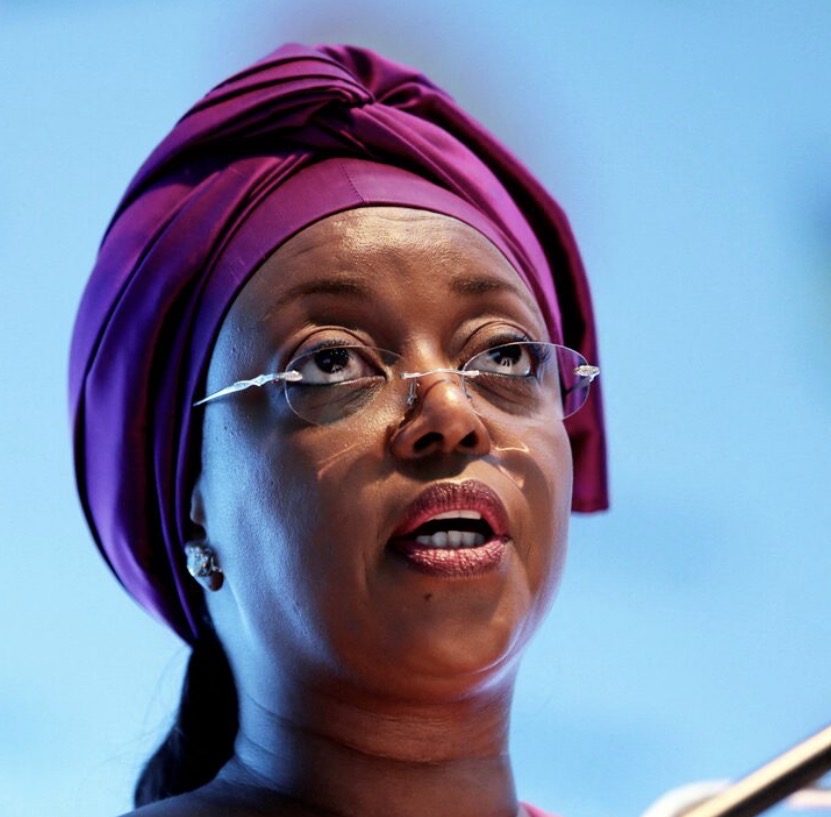
Perhaps no single figure embodies the rot in Nigeria’s oil sector more than Diezani Alison-Madueke, Petroleum Minister from 2010 to 2015. She has been accused of diverting hundreds of millions of dollars of public money. According to EFCC prosecutors, she used $115 million to bribe INEC officials to secure victory for the PDP in the 2015 election. She appeared as a co-offender distributing campaign funds in at least four other major cases. Her legal saga has shifted to civil forfeiture, with her team challenging asset forfeiture orders, arguing her constitutional rights were violated.
The NNPC Black Hole
Under the watch of the NNPC, 60 million barrels of oil valued at $13.7 billion was stolen from 2009 to 2012. NEITI also discovered that $11.6 billion was missing from Nigeria LNG Company dividend payments, and that $11.63 billion had been paid to the NNPC in crude swaps from 2005 to 2012 with no evidence of the money being remitted to the federation account. Additionally, $2.2 billion was illegally withdrawn from Excess Crude Oil Accounts, of which $1 billion was supposedly approved by President Jonathan to fund his reelection campaign without the knowledge of the National Economic Council.
Lawmaker Farouk Lawan was caught on video receiving money from oil magnate Femi Otedola during the oil subsidy scam investigation — a case of an anti-corruption probe itself being corrupted.
Stella Oduah — The Armoured BMW Scandal
Aviation Minister Stella Oduah became notorious for allegedly procuring two armoured BMW cars worth over ₦255 million from public funds. Her corruption trial has illustrated Nigeria’s judicial slow grind, with her case dragging on for years.
Muhammadu Buhari Era (2015–2023): The Anti-Corruption President with Blind Spots
Buhari rode to power on a fierce anti-corruption mandate. The EFCC announced 603 corruption convictions since his inauguration in 2015 — roughly double the conviction rate under Jonathan — and claimed to have recovered some ₦500 billion (about $1.4 billion) in stolen funds. 
Yet his own administration was not clean. In 2016, Buhari was reportedly presented with evidence that his chief of staff, Abba Kyari, took a N500 million bribe from MTN to help slash a $5 billion fine against the company.  In 2016, Senate indictment fell on Secretary to the Government of the Federation Babachir Lawal in a N200 million contract scandal for the clearing of “invasive plant species” — Lawal owned the company that got the contract. 
Abdulrasheed Maina — The Pension Fraud Fugitive
In November 2015 the EFCC declared pension funds fraudster Abdulrasheed Maina wanted, but he remained at large. In October 2017 he was spotted back on the government payroll: the Ministry of Interior had reinstalled the wanted man and even promoted him to director. Maina was finally brought before the court in December 2020. 
The Power Sector Black Hole
A study estimated that Nigeria lost ₦11 trillion ($64.7 billion in 2015 dollars) to corruption in the power sector between 1999 and 2017 — over seven times Nigeria’s annual defence budget.  Despite this, Nigeria with nearly 200 million people generates roughly as much electricity as Oman, a country of 4.5 million.
The Bola Tinubu Era (2023–Present): The Accused as President
Tinubu himself has long faced allegations of corruption and questions about the source of his considerable wealth. In a separate DOJ case, allegations were made that from the late 1980s, accounts in Tinubu’s name received money from the sale of heroin. 
The arraignment of former Attorney-General Abubakar Malami on money-laundering charges marked a watershed moment — rarely has a former chief law officer faced the dock, and the case remains bogged down in pre-trial manoeuvres. 
Systemic Rot: Sector by Sector
Defence: Security votes — opaque slush funds given to federal, state, and local officials — total over $670 million annually. The number of such votes in the federal budget grew from about 30 in 2016 to over 190 in 2018, unaudited and exempt from procurement rules. 
Agriculture: Between 1980 and 2010, of ₦873 billion ($5.8 billion) in agricultural subsidies, an estimated ₦776 billion ($5.2 billion) was lost to corruption. 
Judiciary: For the first time in Nigeria’s history, under Buhari, judges and top military officers including retired service chiefs were prosecuted for corruption. 
What Recovery Has Looked Like
According to Global Financial Integrity, $129 billion flowed out of Nigeria in just one decade through crime, corruption, and tax evasion.  The EFCC recovered at least $750 million in local and foreign currency linked to corruption and fraud in 2021 alone  — a fraction of what continues to flee the country each year.
The Price Paid by Ordinary Nigerians
Those hundreds of billions of dollars could have translated into millions of vaccinations for children, thousands of kilometres of roads, hundreds of schools, hospitals, and water treatment facilities.  The stolen wealth represents the investment gap in building hospitals to reduce Nigeria’s exceptionally high maternal mortality rates, expanding an education system failing millions, and procuring vaccines to prevent outbreaks of preventable diseases. 
Nigeria’s political system continues to reward rather than punish corruption. When ruling party chieftain Olabode George emerged from prison in 2011 after a corruption conviction, he was treated to a rapturous welcome by members of Nigeria’s political elite including former president Obasanjo.  The message, as one analyst put it, was unmistakable: in Nigeria, proven criminality remains no bar to the highest corridors of power.