The Camera, the Bullet, and the Cage: Breaking the Silence on Pelumi Onifade’s Extrajudicial Murder| Tobi Olukanni
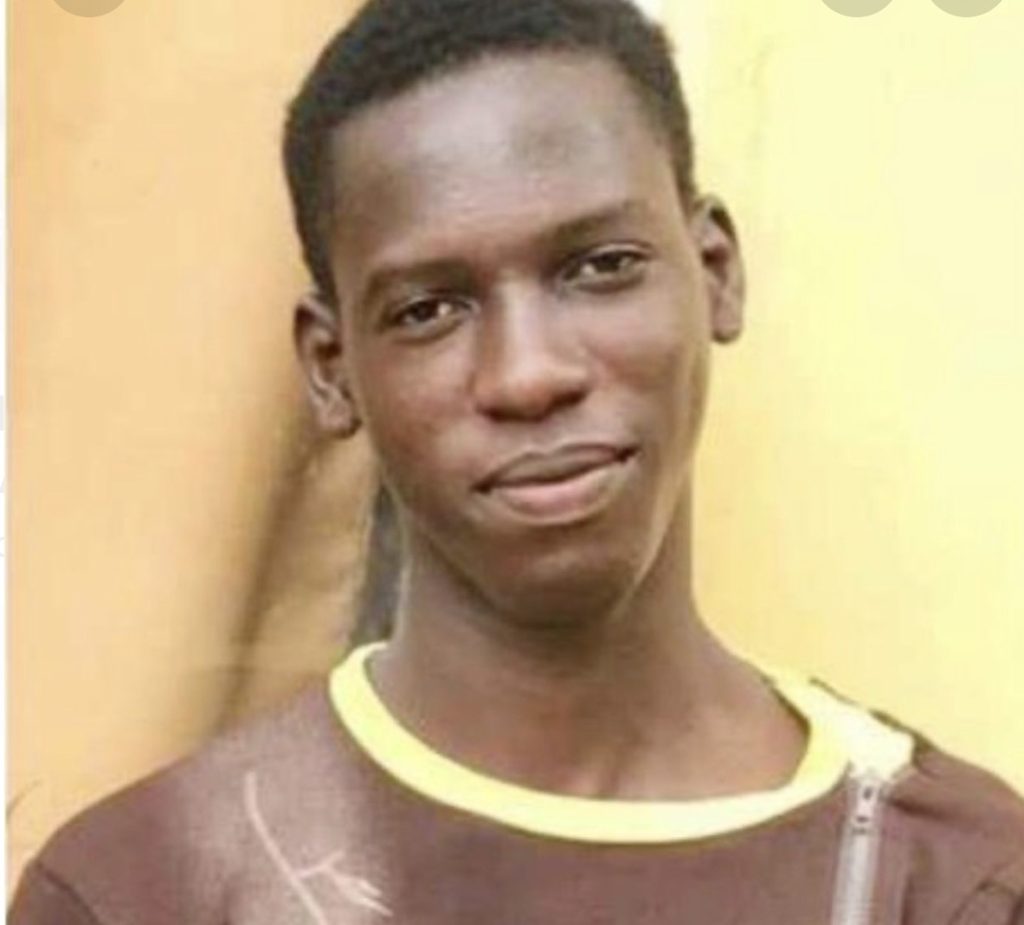
For nearly six long years, the name Pelumi Onifade hung in the air like an unanswered prayer, a ghost haunting the conscience of Nigeria’s justice system.
In October 2020, at the peak of the historic #EndSARS protests, the 20-year-old student and intern journalist set out with a camera to document history. Instead, he became a casualty of the very state-sponsored lawlessness he was trying to expose.
Following years of institutional stonewalling and bureaucratic deflections, a landmark breakthrough has finally shattered the wall of official silence [The Guardian].
A newly released forensic postmortem examination has formally confirmed what human rights advocates have long asserted: Pelumi Onifade was killed by a high-velocity firearm projectile to the abdomen while in the custody of the Lagos State Task Force [Media Rights Agenda (MRA)]. This explosive revelation turns a years-long “missing person” mystery into an active extrajudicial murder investigation, opening what must become the definitive road to justice.
The Fatal Footage: Why Pelumi Was Targeted
Pelumi was not a bystander; he was an eye-witness with a lens. A 200-level history student at the Tai Solarin University of Education (TASUED), he was interning as a reporter and videographer for the online broadcaster Gboah TV [Premium Times].
On Saturday, October 24, 2020, Pelumi was deployed to the Abule Egba and Agege axes of Lagos State to capture the civil unrest gripping the commercial capital [Premium Times].
It was there that he performed an act of immense journalistic bravery. He filmed a local politician stepping out of a vehicle and aggressively firing a rifle directly into a crowd of civilian protesters. Shortly after transmitting the raw footage, Pelumi moved to cover an attempted break-in at a government warehouse facility in the nearby Abattoir area of Oko-Oba, Agege. As the Lagos State Task Force raided the scene, firing weapons to disperse the crowd, Pelumi was targeted.
Despite wearing a clearly identifiable press jacket, he was shot in the abdomen [Media Rights Agenda (MRA)].
Witnesses watched in horror as task force operatives dragged his bleeding body into the back of a police van [Premium Times]. He was never seen alive again [The Guardian].
The Cover-Up and the Verdict
For days, Pelumi’s frantic family scoured police stations across Lagos, met with absolute denials from security agencies [Premium Times].
It wasn’t until October 30, 2020, that his body was discovered abandoned at the Ikorodu General Hospital Mortuary—miles away from where he was arrested [The Guardian].
The state’s handling of the case pointed directly to an institutional cover-up. In early 2026, authorities attempted to halt legal momentum by claiming all reference DNA samples were lost when a state DNA centre was torched during the 2020 riots [The Guardian].
Human rights attorneys swiftly dismantled this defence, proving via official records that the facility was burned a full day before Pelumi was even arrested.
Faced with legal pressure, medical authorities finally capitulated. On June 24, 2026, a court-ordered DNA test matched the remains of the body, tagged simply as Cadaver No. 1385, to his grieving mother [The Guardian].
The final, nine-page postmortem report completely strips away any remaining state deniability [Media Rights Agenda (MRA)].
The pathologist noted that Pelumi was a perfectly healthy child with zero evidence of natural disease [Media Rights Agenda (MRA)].
The medical conclusion was unambiguous: Pelumi’s death was caused by massive blood loss in the abdominal cavity resulting from a penetrating firearm projectile [Media Rights Agenda (MRA)].
The bullet that killed him came from a state-issued gun, fired at close range into a detained reporter.
The Road to Justice
Pelumi Onifade’s murder is not an isolated tragedy; it is an indictment of the institutional rot that triggered the #EndSARS movement in the first place.
During those dark weeks, Nigeria’s security apparatus operated with total impunity, treating cameras as threats and journalists as combatants.Journalists are not the enemies of the state.
The constitution mandates them to act as the bridge between power and the people. When you murder a reporter, you are trying to murder the truth.The wrongful death action, spearheaded by the Media Rights Agenda (MRA) against the Nigeria Police Force and the Lagos State Government, has successfully forced the hand of the state [Media Rights Agenda (MRA)].
With the coroner’s inquest adjourned to October 6, 2026, political leaders and civil rights champions are demanding rapid escalations [Media Rights Agenda (MRA)]. True justice can not end with an autopsy report or a DNA match.
The Lagos State Attorney-General and the Inspector General of Police must identify the specific task force unit deployed to Agege on October 24, 2020.
The officers who pulled the trigger, the commanders who ordered the body hidden, and the collaborators who tried to falsify medical data must face public prosecution for murder.
The world is watching Lagos. Pelumi’s camera may have been stopped, but the truth it captured can no longer be buried.