Makoko Residents Protest in Alausa Over Demolitions, Demand Compensation
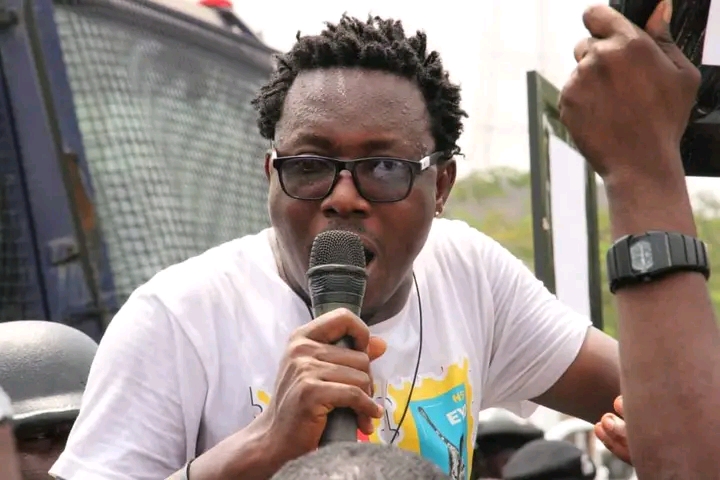
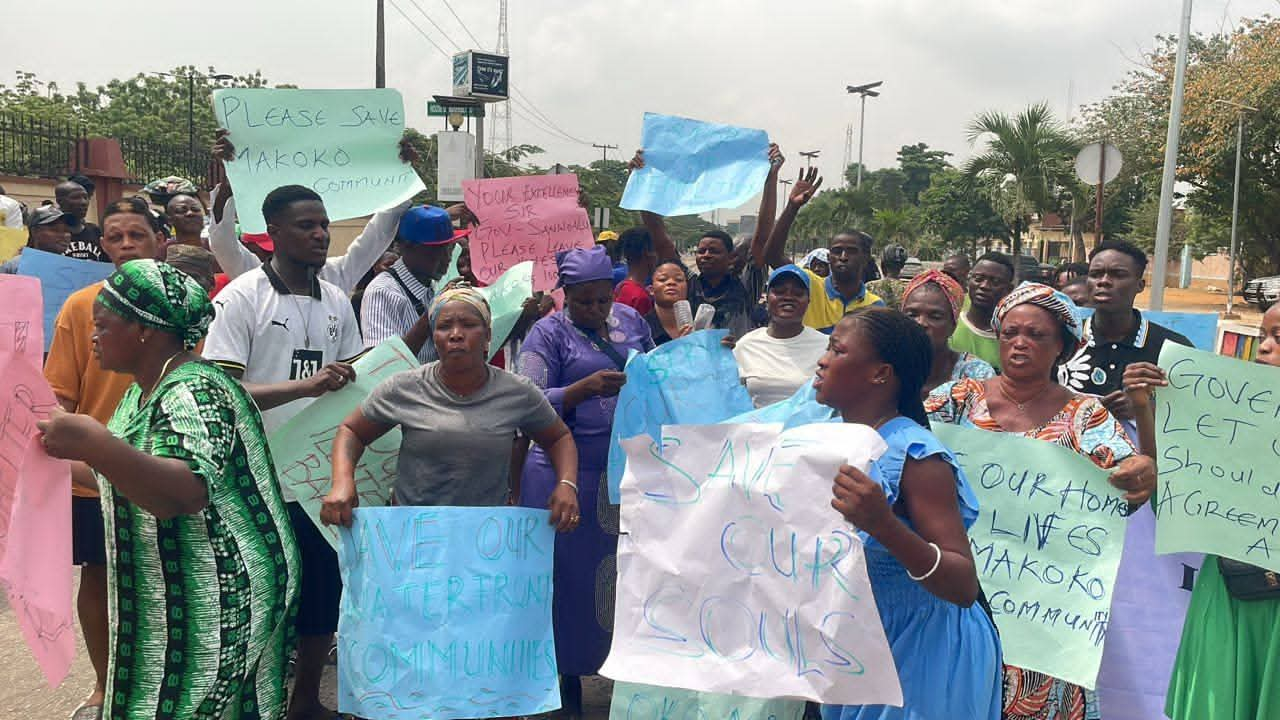
Residents of Makoko, a crowded waterfront community under the Third Mainland Bridge in Lagos, on Thursday protested at the Lagos State Governor’s Office and the House of Assembly in Alausa. They demanded an immediate stop to ongoing demolitions and compensation for families already displaced.
The protest was led by community leaders and civil society groups, including Corporate Accountability and Public Participation Africa (CAPPA). The protesters accused the Lagos State Government of breaking earlier agreements and demolishing homes far beyond approved safety limits around high-tension power lines.
Carrying placards with messages such as “Save our homes, lives and the Makoko community” and “Please hear our cry, limit demolition to 100 metres”, residents said the exercise had left thousands homeless, destroyed livelihoods, and led to deaths, including infants and elderly people.
Speaking at the protest, Zikora Ibeh, CAPPA’s Assistant Executive Director, said security operatives and demolition teams had forcefully evicted residents since 5 January. She accused the state government of unlawfully displacing families from their ancestral homes without providing shelter, water, or alternative housing, “Women, children, and entire families have been tear-gassed and pushed into homelessness. We are demanding an immediate halt to the demolitions, proper compensation, and an investigation into the use of force,” she said.
Ms Ibeh also alleged that the demolitions were part of a plan to remove low-income residents from valuable waterfront areas, adding that affected families had received no relief or support.
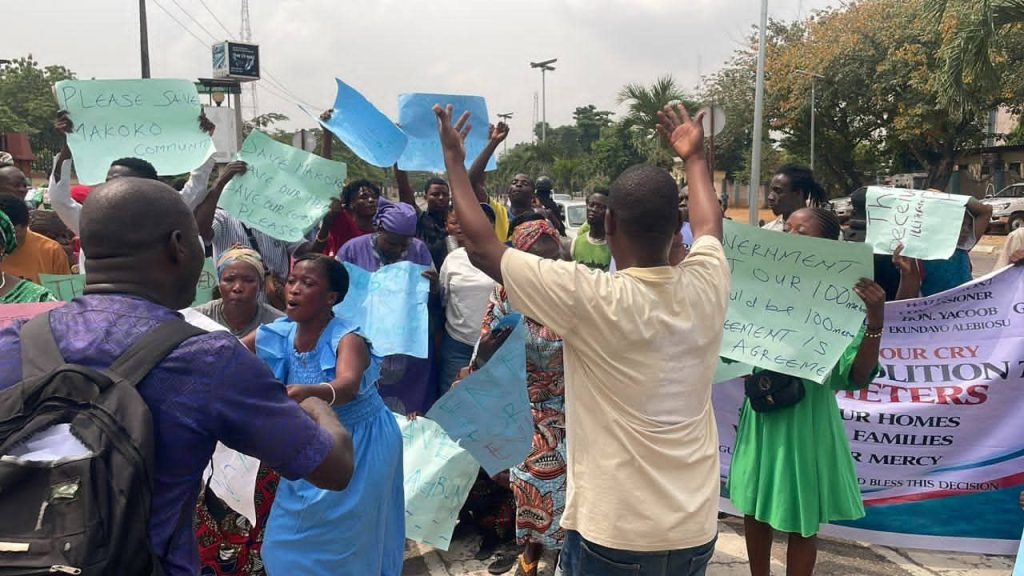
Residents said the demolitions violated agreements reached with the government. According to them, clearance was first set at 30 metres from power lines, later increased to 50 metres, and eventually agreed at 100 metres. However, protesters said demolition had gone far beyond this limit.
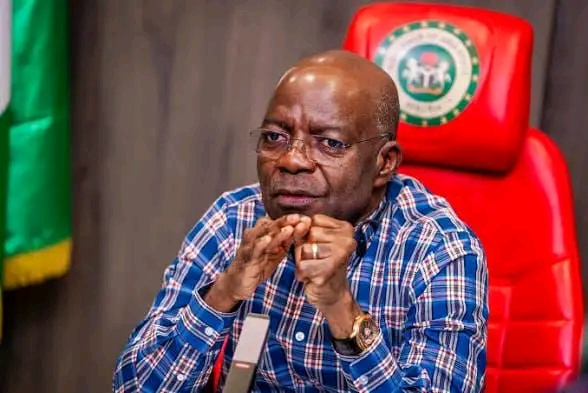
A community leader and Slum Dwellers International member, Ojo Jide, said the process lacked proper records, making compensation impossible, “There is no house numbering, no data collection, no profiling. How can the government compensate people when there is no record of what has been destroyed?” he asked. He also criticised the timing of the demolitions, which continued through the Christmas and New Year holidays, describing it as a violation of residents’ rights. Another resident, Phineas Kojah, said Governor Babajide Sanwo-Olu had personally assured the community in November 2025 that demolitions would not exceed 100 metres.
“He gave us his word. Now the demolition has gone far beyond that, leaving families exposed and homeless,” he said.
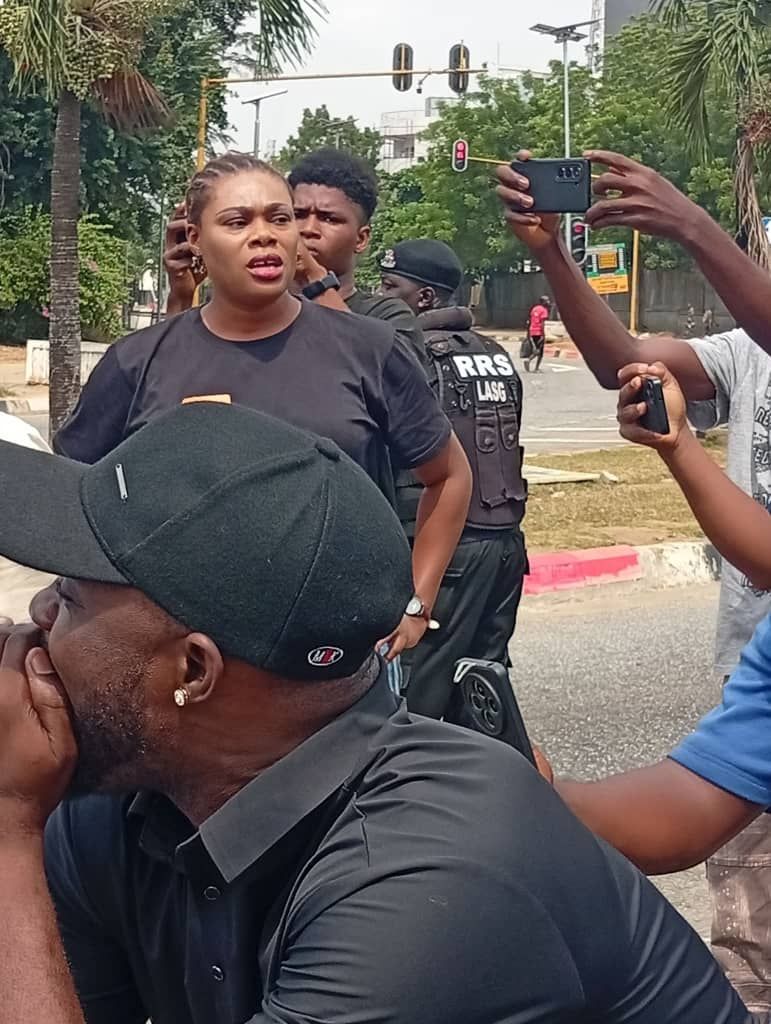
After gathering at the Governor’s Office, the protesters marched to the Lagos State House of Assembly, temporarily blocking parts of the main road in Alausa. Police officers later negotiated with the protesters, allowing them to occupy one side of the road while traffic flowed on the other. The Chairman of the House Committee on Information, Strategy, and Security, Stephen Olukayode, addressed the crowd and promised to relay their concerns to the governor. He said the Assembly was not aware of any breach of agreements and urged both parties to resolve the issue through dialogue.
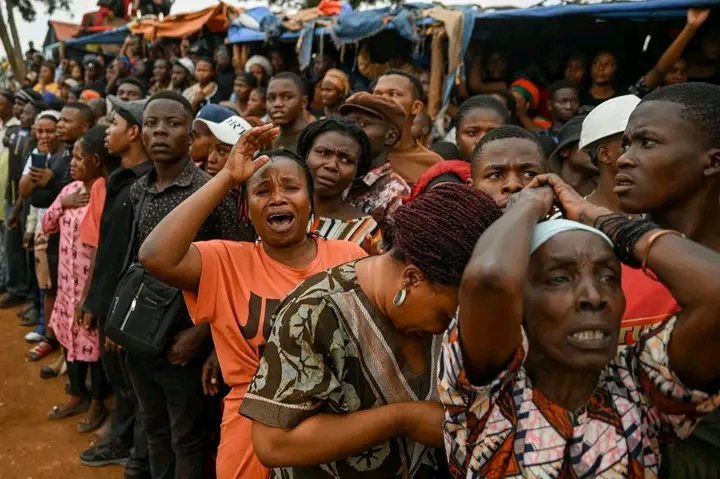
Civil society leaders at the protest, including Nnimmo Bassey of the Health of Mother Earth Foundation (HOMEF), condemned the demolitions. Mr Bassey compared the situation in Makoko to forced displacement by bandits in northern Nigeria, saying communities were being uprooted without protection or care. CAPPA and partner organisations, including the Centre for Children’s Health Education, Orientation, and Protection (CEE-HOPE), said over 3,000 homes had been demolished, displacing more than 10,000 people. Schools, clinics, and churches were also destroyed.
A youth leader, Oluwatobi Aide, also known as Woli, was arrested on Monday after asking demolition officials to allow residents retrieve their belongings. He was released on Wednesday. CAPPA said he was hospitalised after tear gas exposure and that his health worsened while in police custody.
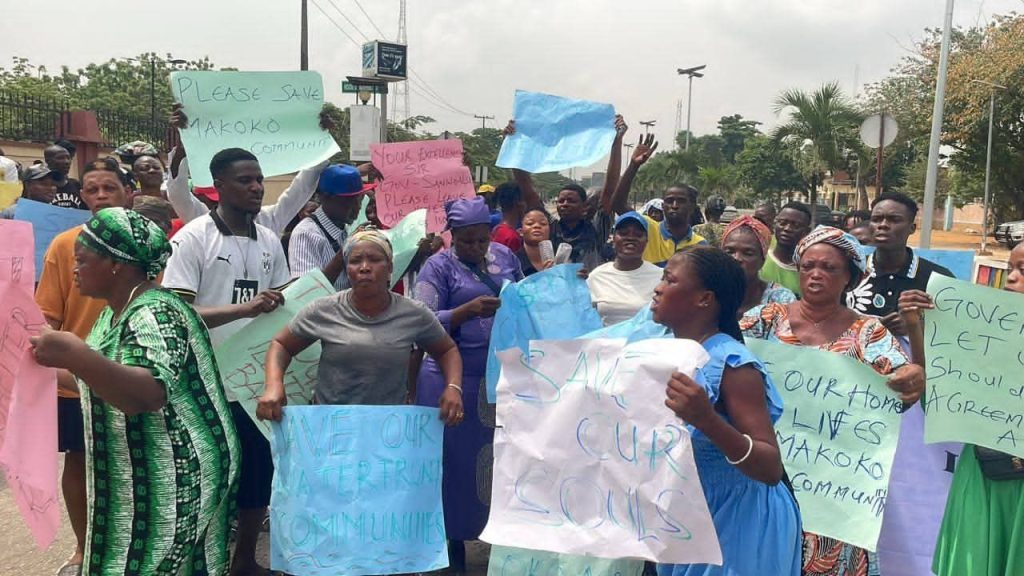
The demolitions have severely disrupted daily life in Makoko. School attendance has dropped sharply, with some schools recording fewer than 20 pupils out of hundreds enrolled. Many children now sleep on boats or under debris, without safe places to study. Women in the community said they lack privacy for bathing, sleeping, and managing menstrual hygiene. Families have lived for weeks in unsafe and unsanitary conditions, exposed to rain and other health risks.
Residents and civil society groups have called on Governor Babajide Sanwo-Olu and President Bola Tinubu to urgently intervene, warning that the situation could turn into a major humanitarian crisis if ignored.
The demolition began on 23 December 2025 to clear a 30-metre safety corridor beneath a high-tension power line running through Makoko, Oko Agbon, Sogunro, and the Third Mainland Bridge. Residents initially cooperated after receiving assurances that the exercise would be limited and that compensation would follow. By early January, demolition reportedly extended beyond 100 metres, triggering protests and police intervention with tear gas.