Explainer: Are Prisoners Allowed to Vote in Nigeria’s Elections?
Background
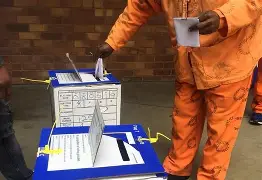
Nigeria’s electoral system, before now, had no provision for inmate voting in elections conducted by the Independent National Electoral Commission (INEC). Over the years, prisoners in correctional centres across the country have been excluded from participating in elections because the electoral law and guidelines did not clearly make arrangements for voting inside custodial centres.
However, the issue of whether inmates should be allowed to vote became a public discussion after several court cases and advocacy by civil society organisations, who argued that prisoners are still citizens and should not lose their voting rights, especially those awaiting trial who have not been convicted by any court of law.
Several courts in Nigeria have ruled that inmates have the right to vote, directing the electoral body to make arrangements that will allow eligible prisoners to participate in elections. Despite the judgment, the implementation has been slow due to logistical, legal, and administrative challenges in conducting elections inside correctional facilities.
The debate continues as Nigeria prepares for future elections, with questions about whether the electoral law, the Independent National Electoral Commission (INEC), and the Nigerian Correctional Service will fully provide a framework that will allow prisoners to exercise their voting rights.
An international election observer, Yiaga Africa, in the aftermath reported on the Ghana election, where there was provision for special voting and proxy voting to protect citizens’ rights to vote.
The civil society organisation immediately made a move to consolidate the same in the Nigerian electoral system and called on the National Assembly to amend the Electoral Act 2022 to give room for voting rights for prisoners and special voting for eligible citizens performing essential election duties.
Similarly, the Carmelite Prisoners’ Interest Organisation (CAPIO) and the Nigerian Correctional Service (NCoS) said that there is also no legal or constitutional provision against the participation of these persons in voting during elections in Nigeria; they cited countries like South Africa, Kenya and Zambia, where the constitutional right of inmates to vote is upheld.
It was also gathered that the former Independence National Electoral Commission (INEC) chairman, Professor Mahood Yakubu, was in his effort to get inmates to vote.
The Carmelite Prisoners’ Interest Organisation (CAPIO) bill on inmates’ right to vote
The Carmelite Prisoners Interest Organization (CAPIO), led by Dr Tonye Clinton Jaja, sponsored a bill to amend sections to Section 9, advocating for voter registration centres in prisons, and Section 13 of the Electoral Act, allowing inmates to transfer their polling units to their place of detention. One significant proposal is the amendment of Section 40 to include a provision for the Independent National Electoral Commission (INEC) to establish polling units in custodial centres.
Reaction of the House of Assembly and the Federal Government
Reports have it that the Chairman of the Senate Committee on the Army, Senator Abdulaziz Yar’Adua, has sponsored a bill seeking to enfranchise security personnel, electoral workers, and other categories of Nigerians often excluded from participating in general elections due to the nature of their national duties, which was silent about inmates.
However, the Minister of Interior called the attention of the legislative to the other marginalised groups, like the people awaiting-trial inmates, emphasising that 70% of Nigeria’s correctional facility population are legally presumed innocent.
The bill which gained traction became so important that Senate Leader Opeyemi Bamidele said the proposed Electoral Bill, 2025, introduces changes intended to globalise Nigeria’s election process and strengthen public confidence, reiterating that the most notable provisions in the bill formally recognise the right of eligible inmates to vote.
Bill for inmates to vote signed into law
Sections 12(1)(d) and 12(2) clearly acknowledge the right of inmates to register as voters and take part in elections. Section 12(2) further states that, for the purpose of voter registration, an inmate should be considered as ordinarily residing in the location where he or she is legally detained or imprisoned. This provision removes the residency condition that had earlier prevented inmates from participating in voting.
With this development, the Independent National Electoral Commission (INEC) is expected to put in place guidelines and procedures that will allow voter registration and voting to take place inside correctional centres before the 2027 general elections.